Seth
Raynor
The engineer who learned golf architecture from first principles — then turned a shared vocabulary of ideal holes into some of America's strangest and most exhilarating golf.
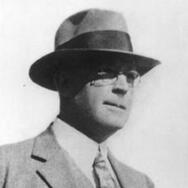
The templates repeat. The golf does not.
Seth Raynor entered golf architecture sideways. Trained as an engineer and working as a surveyor on Long Island, he was hired by C.B. Macdonald to survey the ground that became National Golf Links of America. Macdonald soon trusted him with construction and design, and Raynor eventually carried their system of 'ideal holes' into a prolific practice of his own. Fishers Island, Shoreacres, Camargo, Yale and other surviving work make the result unmistakable: bold geometry, enormous hazards, severe green forms and strategic concepts borrowed from famous British holes but transformed by entirely different American ground.
That last point is the key to understanding Raynor. A Redan, Biarritz, Alps or Road hole is not supposed to be a photocopy. The template is a strategic proposition — a diagonal green that rewards a particular angle, a blind approach that asks for commitment, a deep swale splitting a putting surface — and the site determines the expression. Once you learn the vocabulary, a Raynor course becomes more fun, not less surprising. You start recognizing the question while wondering how violently or cleverly this piece of land will answer it. Few architects make architectural literacy feel so much like part of playing the game.
A national footprint with distinct centers of gravity.
The geography of the portfolio helps tell the story of the practice.
19 states represented in the current TCR catalog
How to read Raynor once the strange hole names start making sense.
Learn the vocabulary — Redan, Biarritz, Alps, Road, Short — then pay attention to the adaptation. The genius is not repetition; it is how the same strategic idea changes when the ground changes.
Templates are ideas, not copies
Redan, Biarritz, Alps, Road and the other ideal holes carry strategic principles from course to course, but their scale, orientation and relationship to the land can change dramatically.
Engineering becomes drama
Raynor's surveying and construction background helped him create bold landforms, deep bunkers and highly legible geometry that can feel almost impossible to mistake for natural accident.
Greens tell you how to play
The putting complex often broadcasts the strategy backward through the hole. Understanding its slope, angle or internal feature changes the ideal line of approach.
Blindness can be information
An Alps or other obscured shot is not random punishment. It tests whether the golfer can understand the ground and commit without seeing the entire result.
Recognition makes the game richer
Knowing the template does not solve the hole. It gives the golfer a language for comparing how the same strategic idea behaves on completely different sites.
The traits the highest-rated Raynor-attributed courses consistently lean into — ranked without pretending the decimal points are the story.
Architecture reflects TCR Architectural Interest. Green Complexity isolates the putting surfaces and surrounds — intentionally separate signals.
How much of the portfolio sits behind the gate?
*Publicly accessible includes Public, Resort, Municipal and Semi-Private classifications in the current TCR catalog.
The footprint is the visual.
Three architects that live nearby in TCR’s DNA.
This is not a historical lineage claim. It compares each architect’s highest-rated TCR courses across Architecture, Green Complexity, Conditioning, Shot Variety, Difficulty, Scenery and Walkability. Frequent co-attributions are excluded so restoration overlap does not manufacture a match.
Kyle Franz
Closest overlap: Walkability · Difficulty · Scenery
Bill Coore
Closest overlap: Shot Variety · Conditioning · Architecture
Alister MacKenzie
Closest overlap: Walkability · Difficulty · Shot Variety
Three courses. One body of work that never needed a single visual signature.
The ten highest-rated Raynor-attributed courses in TCR.
National Golf Links of America
Shinnecock Hills Golf Club
Fishers Island Club
Sleepy Hollow Country Club
Yeamans Hall Club
The Camargo Club
Chicago Golf Club
Yale Golf Course
Shoreacres Golf Club
Piping Rock Club
The courses worth knowing after the famous names.
TCR discovery signals surface Raynor-attributed courses whose quality deserves more attention than conventional recognition suggests.
Monterey Peninsula Country Club (Dunes Course)
Golden Age strategy meets mesmerizing coastal beauty
Blue Mound Golf & Country Club
Raynor mastery, restored for modern championship play
Essex County Country Club
Golden Age pedigree, Hanse-refined and fiercely strategic
Lookout Mountain Club
Seth Raynor’s mountaintop classic, dramatically restored
Waialae Country Club
Hawaii’s classic Tour-tested strategic parkland
Country Club of Fairfield
Classic Raynor strategy meets wind off the Sound
Westhampton Country Club
Classic Raynor template holes in the Hamptons
Metairie Country Club
Seth Raynor strategy restored in New Orleans suburb
See your history inside the Raynor portfolio.
Sign in to see how much Raynor you’ve played, the courses already on your Want to Play list, and the strongest Raynor-attributed courses still waiting for you.
Sign in to see your RaynorEvery Seth Raynor design credit in The Caddie Report.
The live catalog — separated into original designs and work on existing courses, while preserving the distinction between renovations, restorations and redesigns underneath.